“If Only…” in Grief
Bridget Jones: Mad About the Boy“If Only…” in Grief is the recurring counterfactual thought through which Bridget Jones’s bereavement returns, turning memories of Mark Darcy into an imagined alternative life she cannot recover. The phrase appears at moments when family routine briefly quiets, then gathers force through flashbacks, mementos and the children’s ordinary milestones. Its significance lies in the tension between longing to revisit what might have been and the practical necessity of continuing to care for the living.
The Thought’s Return
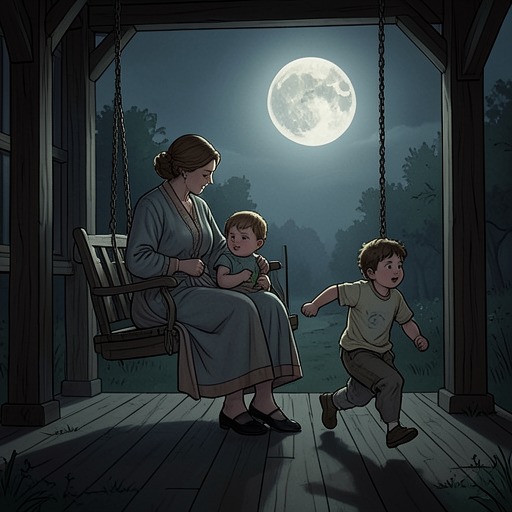
The phrase first takes hold after Bridget has checked on the sleeping children. Mabel is clutching her doll, Saliva; Billy is tucked in with his toys. Watching their soft cheeks and listening to their breathing, Bridget is overtaken by the thought, “If only . . .” The scene moves abruptly from tenderness to darkness: the children’s presence does not protect her from grief, but makes Mark’s absence newly palpable. She rushes downstairs, finds the kitchen silent and empty, and tries to stop the thought by switching on the kettle. That small domestic action is a form of resistance: the mind turns toward loss, while the body reaches for the next task.
The phrase’s recurrence is tied to the suddenness of Mark’s death and to the way its memory breaks into later life. Five years after his death, Bridget remembers Billy running through the house crying, “I lost Dada!”; Jeremy and Magda arriving with a policeman; and Mark’s face on the television beneath the dates “Mark Darcy 1956–2008.” The news reports that Mark, a British human rights lawyer, was killed when the armoured vehicle carrying him in Darfur struck a landmine. Bridget recalls the shock of waking in the mornings and, for a moment, believing life was unchanged before pain returned. The remembered sequence is not a settled account viewed at a distance: it remains a wound that can make the present collapse back into the moment of loss.
Grief Against the Work of Living
Bridget’s recollection emphasizes how bereavement had to coexist with immediate care. She describes managing nappies and bottles, trying to hold herself together until help arrived, and retreating to the bathroom to cry before putting on mascara and bracing herself again. Counsellors and therapists encouraged honesty and a secure base for Billy and, later, Mabel; Bridget, however, found the practical problem of changing a nappy while microwaving a fish finger more useful to survival than the formal language of the grieving process. Mark had arranged the family’s financial affairs, and Bridget and the children moved from the memory-filled house in Holland Park to a smaller home in Chalk Farm. Having the practical necessities taken care of did not remove her inner desolation.
The diary gives this alternation a blunt rule: “KBO: Keep Buggering On.” It is neither a declaration that grief has ended nor a denial of pain. It names the work required to continue as a mother and widow when there is no choice but to get through the day. In the same reflection, Bridget recalls the thoughts she tried to block: their last moment together, Mark’s suit against her skin, the last unknowing kiss, and the doorbell that announced the news. The counterfactual “If only” belongs to this cluster of memories, alongside the unfinished “I never . . .” It marks the mind’s repeated attempt to return to an irreversible past even as daily responsibilities pull Bridget forward.
Letter, Keepsakes, and the Children
Tom’s advice changes the form Bridget gives to her grief: he tells her to write Mark a letter and to wallow in it. She climbs into the bunk bed beside Billy and Mabel, then later sits on the floor among cuttings and photographs. When she opens the box, she reads the newspaper account of Mark’s death and the tributes to his work, including his intervention to secure the release of two British aid workers held hostage. The article’s public record sits beside her private loss. It identifies Mark as an internationally recognized lawyer and records that he left a widow, a two-year-old son and a three-month-old daughter; for Bridget, the clippings and photographs are not simply information but objects that bring the past into the room.
In the letter, she admits that she is lonely and cannot manage alone. She misses Mark’s comfort, counsel and physical presence, and cannot bear that he is not there to watch the children grow up. Her thought turns explicitly toward the life that might have continued: “we could have just been at home together for Christmas if only . . .” She immediately tries to stop herself: “Never say could’ve, should’ve or if only.” The prohibition does not resolve the longing; its appearance in the letter shows how difficult it is to keep the counterfactual out of thought. Bridget also apologizes for being upset about matters other than Mark’s death, including dating and work. The letter thus records both a continuing bond with Mark and the self-reproach that accompanies the wish to make room for a life beyond mourning.
The children carry that bond into small, present-tense encounters. After Bridget finishes writing, Mabel gets out of the bunk bed and stands by the window. She tells her mother that the moon follows her, then points out an owl. Bridget begins to explain the moon, but Mabel interrupts. The episode places a child’s attention to the night sky beside her mother’s bereavement without making the child responsible for explaining or curing it. Later, when Billy says that Father’s Day is on Sunday and that the children have made cards, Bridget pulls the car over, turns off the engine and wipes her face before looking at them. Their cards make Mark’s absence part of a family occasion; the pause shows the force of the reminder before she responds to the children.
Recurrence and the Present
Bridget’s diary continues to set grief beside the crowded arithmetic of everyday life. On Saturday 20 April 2013, she records zero texts from Roxster, 4,567 checks for texts, 395 minutes spent thinking about Mark, loss, death and life without him, and no sleep. The numerical ledger makes the return of grief visible as part of a night consumed by waiting, memory and other demands. It does not suggest that sorrow has displaced every other concern; instead, it records how the two occupy the same lived day.
Christmas gathers several versions of loss into one remembered sequence. Bridget recalls childhood Christmases with her parents in Grafton Underwood, her father’s last Christmas before he died, and the first Christmas when she and Mark took Billy to church. She also remembers the first nursery nativity after Mark’s death, when she could not believe Christmas would happen at all. The holiday recurs, but its meaning changes with family and time: childhood ritual, anticipated motherhood, shared life with Mark, and then the pain of celebrating without him. By placing these scenes in succession, the diary shows how an occasion can reopen grief without making the memories identical.
The concept therefore describes more than a single phrase of regret. “If Only…” returns at the edges of care, in the quiet after bedtime, among photographs and cuttings, and around milestones that should belong to the children and their father. Its repetitions preserve the gap between the life Bridget wishes she could share with Mark and the one she must continue to live with Billy and Mabel. The diary does not present that gap as closed: it shows Bridget trying to resist it, being drawn back into it, and carrying on within the same recurring movement.